
The Performance-Based Financing (PBF) system is a cornerstone of Rwanda’s healthcare success. Launched in the first quarter of 2026, PBF Version 3 represents the pinnacle of two decades of innovation, transitioning one of Africa’s most recognized health financing models into a fully integrated, digital-first ecosystem.
📝 Project Description
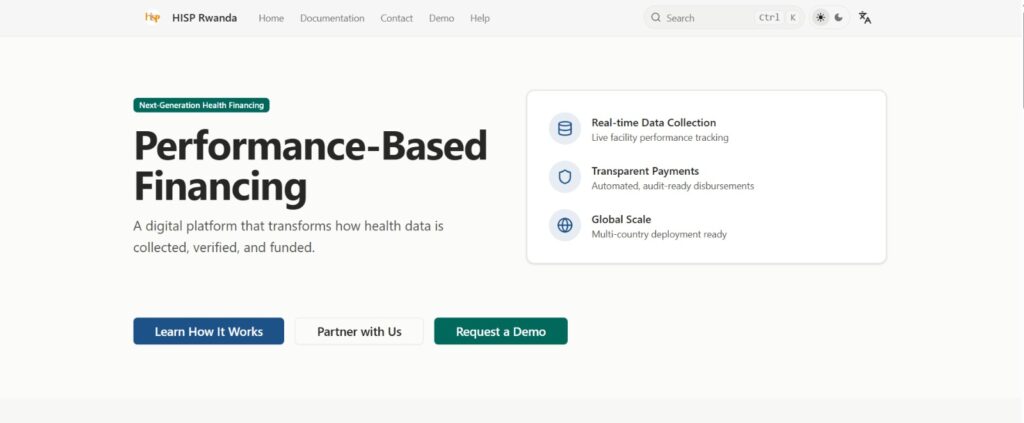
Performance-Based Financing is a strategic mechanism where health facilities are funded based on their verified performance and service quality. PBF Version 3 is a comprehensive digital overhaul of this system, designed to automate the mobilization and distribution of funding across Rwanda’s national health network.
The project involved building a centralized, open-source platform that handles everything from daily data entry and quality scoring to complex tariff configurations and national-level financial reporting. It ensures that healthcare providers are incentivized for results, directly linking financial resources to patient outcomes.
🧱 Challenges
Before the rollout of Version 3, the PBF journey faced several structural and technical hurdles:
- Legacy Fragmentation: Previous versions relied on a mix of paper-based processes and aging digital tools (DHIS2).
- Manual Invoicing: Generating MINECOFIN-compliant invoices was a labor-intensive process prone to human error and payment backlogs.
- Accessibility: Existing tools were often restricted to desktop environments, limiting the ability of district supervisors to conduct real-time quality audits in the field.
✅ Problems Solved
PBF Version 3 directly addressed these pain points through high-impact technical solutions:
- Automated Synchronization: By integrating directly with DHIS2, the system now automatically pulls datasets, indicators, and organization units, eliminating manual data entry and ensuring a “single source of truth.”
- Financial Compliance: The new platform features a dynamic invoice management system that generates ready-to-use, compliant documents for the Ministry of Finance and Economic Planning (MINECOFIN).
- Enhanced Accountability: With batch upload features and completeness monitoring, the Ministry can now track performance with unprecedented transparency.
- Field-Ready Technology: The modern, responsive UI allows supervisors to use tablets for evaluations, enabling immediate quality scoring at the point of service.
🤝 HISP Rwanda’s Role
As the primary technical partner, HISP Rwanda led the end-to-end development and digital transformation of the PBF platform. Our contribution focused on:
- System Architecture: Designing the centralized platform for tariff configuration, partner management, and quality scoring.
- Interoperability: Engineering the robust integration between the PBF system and the national DHIS2 instance.
- Analytics & Reporting: Developing tools for basic and advanced reporting (Excel, PDF, CSV) to support evidence-based decision-making.
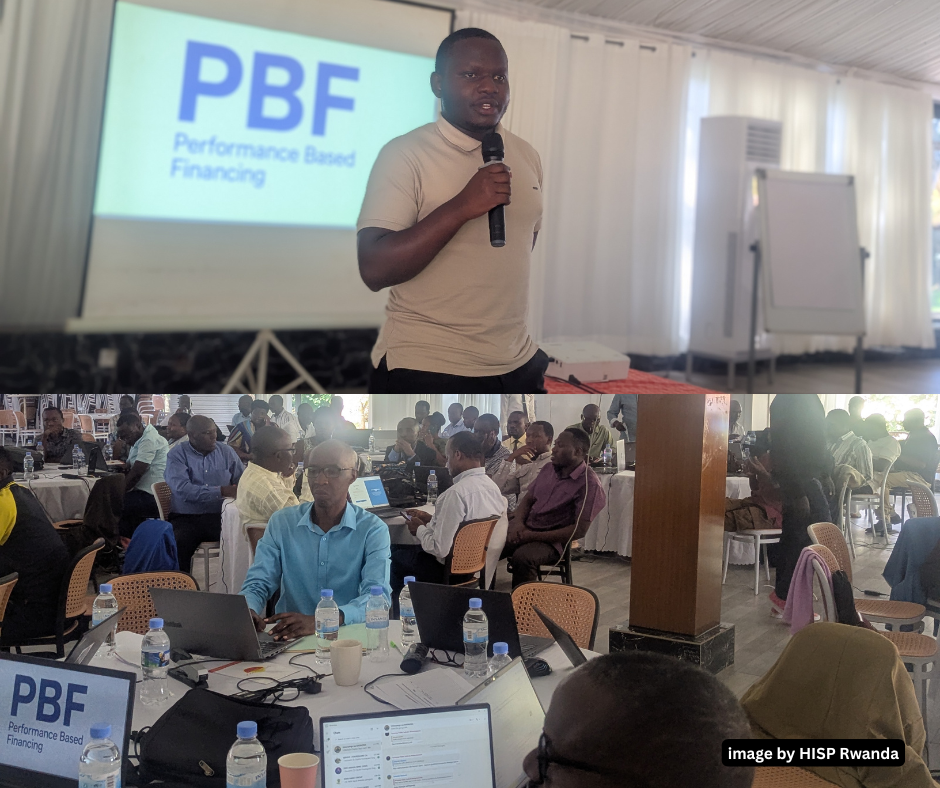
- Capacity Building: Beyond the code, we successfully trained 80+ District Steering Committee members nationwide, ensuring that the technology is backed by a skilled workforce capable of driving long-term adoption.
Why it matters: This project proves that mature health financing systems can be powered by open-source digital infrastructure, making them scalable, sustainable, and a blueprint for other nations.
📊 Core Operational Modules
These modules handle the day-to-day logistics of performance-based contracting and financial verification.
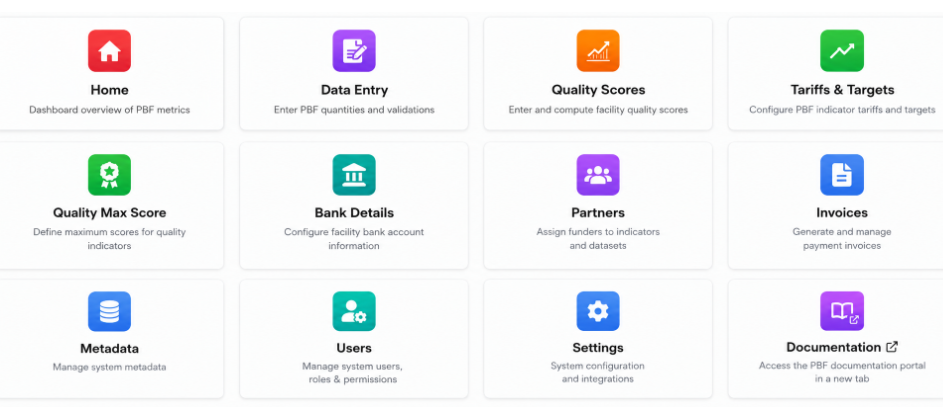
- Centralized Configuration Engine: A master administrative hub for setting global and facility-specific parameters, including tariff configuration (the “price” per service) and quality scoring rules.
- Facility & Partner Registry: A dedicated module for managing facility metadata, partner agreements, and contracting cycles across the entire health system.
- Invoice Management System: A specialized engine for generating MINECOFIN-compliant invoices. It includes dynamic templates, a “grouping” feature for batch processing, and advanced preview/download capabilities in Excel, PDF, and CSV formats.
⚙️ Advanced Technical Features
The platform’s strength lies in its ability to automate data verification and ensure system-wide interoperability.
1. Seamless DHIS2 Integration
The most critical technical achievement of Version 3 is its deep synchronization with the national DHIS2 instance.
- Automated Sync: It pulls service data directly from DHIS2, ensuring that payment indicators match the officially reported health statistics without manual entry.
- Unit Mapping: It automatically aligns “Organization Units” between the financial system and the health registry, eliminating geographical data silos.
2. Quality & Performance Tracking
- Verification Workflows: Tools for monitoring completeness and verifying performance data at multiple levels (District, Provincial, National).
- Batch Processing: Supports batch uploads for performance data, significantly reducing the administrative burden on district steering committees.
- Real-time Analytics: Basic built-in reporting dashboards provide immediate visibility into performance trends before formal reports are exported.
3. Responsive User Infrastructure
- Cloud-Native & Responsive: The platform features a modern UI optimized for both desktop and tablet browsers, ensuring that officials in rural districts can conduct on-site evaluations and data entry without needing a dedicated PC.
- Security & Audit Tools: Comprehensive administrative tools for system metadata management and user access control, ensuring that financial data remains secure and auditable.
Technical Note: By utilizing open-source infrastructure, HISP Rwanda ensured that PBF V3 is not only scalable for Rwanda’s growing needs but also serves as a “Digital Public Good” that can be adapted by other nations looking to modernize their health financing. END