Projects

Discover our diverse projects aimed at strengthening information management across Africa and beyond. From Health, Education, Climate, Agriculture, Logistics,etc.

Rwanda: Cancer Module Integration and CanReg5 Migration (2022–2024)


Client: Rwanda Biomedical Centre (RBC)
Description: HISP Rwanda led the integration of a cancer module into DHIS2 and migrated the CanReg5 system. The project involved developing and integrating the module, training stakeholders, creating data visualizations, and managing user access, thereby enhancing cancer data management and reporting in Rwanda.
Role: Technical Project Lead

The integrated system has had significant impacts on cancer data management in Rwanda. The system has improved data quality and completeness, enabling the development of more comprehensive cancer control strategies. The system has also reduced delays in reporting, providing timely information for decision-making. The system has facilitated the tracking of cancer patients across the continuum of care, including diagnosis, treatment, and follow-up. The system has also enabled the measurement of progress toward national and global cancer control targets. The implementation of this digital solution is a significant step towards achieving Rwanda’s goal of reducing cancer incidence and mortality.

Challenges/Lessons Learned

  • There are other systems used in health facilities, requiring new data entry into DHIS2 as they are not all interoperable.
  • The system requires regular data quality checks by cancer registrars at the National level

Next Steps

  • Integration with other systems is ongoing to have a complete Cancer registry. ( Those systems are EMRs at health facilities, CRVS, and verbal autopsy.
  • Update the DHIS2 Canreg app to make it more dynamic by improving on validation and outputs
  • Packaging of DHIS2 Cancer registry with partners


Sudan: National Health Information System Assessment (2024)


Client: World Health Organization (WHO), Sudan
Description: Conducted a comprehensive assessment of Sudan’s national health information system and delivered a strategic recovery plan with actionable recommendations to rebuild and strengthen the system post-crisis.
Role: Monitoring & Evaluation Specialist.

 Diagnosing Noncommunicable Diseases with DHIS2 in Rwanda for Improved Access to Treatment

Rwanda uses a new NCD tracker in DHIS2 to identify patients and enroll them in treatment, increasing the screening rate of the target population from only 30% to more than 91% in the first two years.

Noncommunicable diseases (NCDs) are a major health problem in Rwanda, according to a 2023 World Health Organization (WHO) report which cites cardiovascular disease, chronic respiratory disease, cancer, and diabetes as significant contributors to mortality for both men and women. A key hurdle for medical providers in Rwanda is identifying patients in time to treat them — national health data indicates that only 12% of patients living with NCDs were diagnosed and receiving treatment in early 2022, and existing screening data was stored primarily on paper, making it difficult to analyze and use. Additional complicating factors included limited awareness in the population about NCDs and associated risk factors; an inadequate referral system for diabetes and hypertension emergencies; ineffective community screening and follow-up; and limited equipment, staff, and infrastructure.

To combat NCDs in Rwanda, the Ministry of Health and the Rwanda Biomedical Centre (RBC), with support from the Defeat-NCD Partnership and the United Nations Institute for Training and Research, have created a five-year strategy for NCD prevention and control, and have been working toward a targeted 25% reduction in premature mortality caused by NCDs by the year 2025. Rwanda’s NCD program aims to coordinate prevention, early detection, diagnosis, treatment and rehabilitative interventions in the country to reduce the incidence and impacts of NCDs. A central part of this effort is scaling up screenings for diseases like hypertension and diabetes. Since July 2022, health officials have been conducting these screenings via a new DHIS2 NCD tracker tool, which was created by HISP Rwanda in collaboration with the RBC. The tool has proven very successful, enabling a huge increase in NCD screenings for the target population, from a base rate of only 30% to more than 91% in the first two years of use.

“The DHIS2 tracker has revolutionized our approach to noncommunicable disease prevention and control. Its data integration identifies at-risk individuals swiftly. Moreover, we’re establishing community NCD profiles for early detection and seamless linkage to care. This technology is driving impactful improvements in health outcomes.”

– Simon Pierre Niyonsenga, Program Director for Non-Communicable Diseases, Diabetes, Renal, Respiratory and Other Metabolic Diseases, RBC


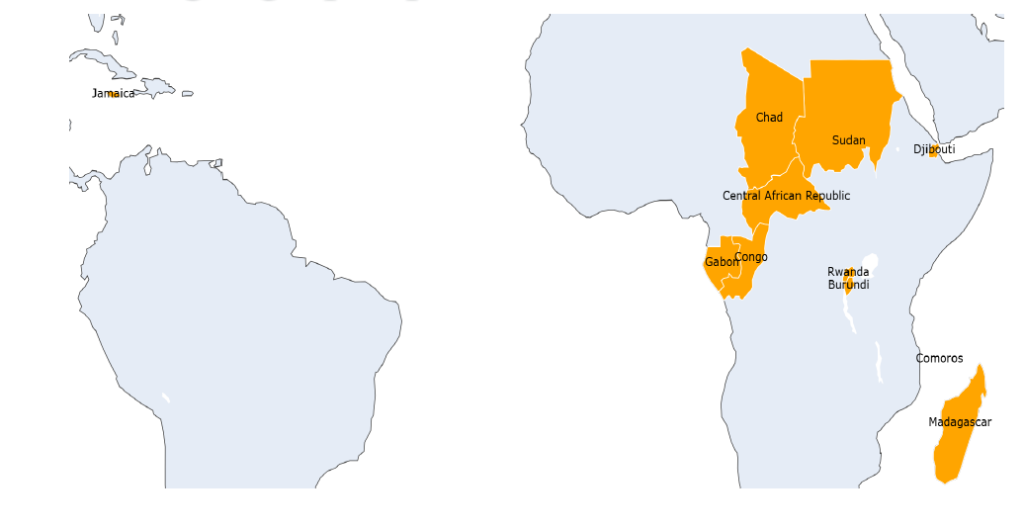
Chad: HIV and TB Case-Based Surveillance Systems (2023–2025)


Client: World Health Organization (WHO), Chad
Description: Implemented DHIS2 Tracker systems for individual case-based surveillance of HIV and TB. HISP Rwanda developed the systems, conducted national-level training, and produced comprehensive documentation to support effective disease monitoring and response.
Role: Lead DHIS2 Tracker Consultant


Digitalization of Last-Mile LMIS Data in Sudan with DHIS2 – Round One

The background for this project is a planned process and engagement between the Federal Ministry of Health of Sudan (FMOH), HISP Rwanda and University of Oslo to enhance Sudan Logistics management by bridging last mile data with the National central LMIS system as part of a larger health system strengthening initiative supported by The Global Fund. This work included consultations in Sudan and development of documentation of both the existing LMIS reporting and how it could be digitised and improved.

The principle of the plan is to work in three rounds and designed in a way that each round can be implemented independently, and with the completion of each individual round on its own giving an additional significant strengthening of the product management in Sudan. Every round adds value and every round will bring the country forward and strengthen the management of logistics of supplies. The final objective of this project is to secure a flow of LMIS information that can ensure timely supplies of all products to health facilities in Sudan. This phased approach was specifically developed to ensure a successful implementation not hindered by the incident that began in April 2023 in Sudan that resulted in insecurities in some states.

Objective

The Round One objective was to digitally aggregate the LMIS information already collected in paper forms for HIV, TB and Malaria and make this information immediately available in a digital dashboard. This dashboard shall then be used for management of the supplies at both the locality level and the national level. The solution is utilising DHIS2 Open source system that is technologically simple and has worked for a number of years in other countries during the period of the security issues.

Achievements/results

The initial plan/work was interrupted by the April 2023 incident in Sudan, but revitalised in mid-2023. We have now succeeded in implementing the first round, configuring the system, training, implementing and rolling it out to 38% (71/189) of the localities in Sudan, covering 47% (3,300/7,000) of health facilities and 41% (18.8 million/ 45.5 million) of Sudan’s population. Under Round One, we have within 3 months configured the system and trained 174 Sudanese in entering the existing paper based LMIS forms into a DHIS2 screen at locality level. Thereby aggregating the paper-based information and making it immediately available at both National and Locality level for management purposes.

The plan and budget for implementation of this round one was compressed in order to make it possible to implement it very quickly and seamlessly utilising in-country personnel, stakeholders at Federal Ministry of Health, NGO’s (Global Fund) and virtual support from UiO and HISP Rwanda experts. The insecurity crisis in Sudan heightened the benefits and urgent needs to obtain stock data for management of the product supply. It builds on the fact that a number of needed resources and infrastructure necessary were already in place.

Challenges & Constraints

The main challenge during the project implementation was the ongoing insecurity in Sudan that limited field visits and shake of existing resources and infrastructure. The HMIS/DHIS2 instance was moved from a government data centre based in Khartoum to a cloud-based solution, in order to continue operation. However, much of the regular reporting activities were understandably reduced as staff prioritised their day-to-day needs. The Sudan country teams in FMoH and Global Fund PMU advocated for continuing the implementation with the reduced scope, as it would help strengthen the health services in areas not directly affected by the conflict. The continued challenge to be expected will be to support the HMIS and supply chain teams reporting, particularly at facility level, if the insecurity persists.

Conclusion/ Way forward

While the round one is providing an immediate monthly overview of supply situation across health facilities for 8 states for HIV, TB and Malaria, the intention is to move to round two that will provide a monthly overview of “end to end” supply situation through integrating DHIS2 with National Medical Supplies Fund (NMSF) Enterprise Resource Planning (ERP), including central stocks for all the 18 states, covering all health programs including essential medicines. In Round three, the objective will be to provide real-time overview of supply situation “end to end” and manage products digitally at health facility level across Sudan by implementing DHIS2 Real Time Stock Management Tool.


Madagascar: DHIS2 Deployment with COVID-19 and CRVS Modules (2021–2023)


Client: Ministry of Health, Madagascar (GIZ, WHO)
Description: Supported the deployment of DHIS2, including specialized modules for COVID-19 and Civil Registration and Vital Statistics (CRVS). The project focused on module development, interoperability with existing platforms, and continuous capacity-building through stakeholder training.
Role: Lead DHIS2 Deployment Consultan


Rwanda: Environment Management Information System Enhancement (2022–2023)


Client: UNDP, Rwanda Ministry of Environment
Description: Improved the Environment and Natural Resources Management Information System (ENR-MIS) by enhancing functionality, conducting feasibility studies for integration with other systems, and upgrading security features.
Role: Technical Consultant

Madagascar: DHIS2 Strengthening and Vaccine Tracker (2023–Ongoing)


Client: UNICEF, Ministry of Health, Madagascar
Description: Strengthened DHIS2 implementation and deployed a vaccine tracker to improve immunization data management and monitoring, supporting Madagascar’s national public health initiatives.
Role: Technical Consultant

Rwanda: Zero-Dose Children and CRVS Integration (2022–2023)


Client: UNICEF, Ministry of Health, Rwanda
Description: Implemented a DHIS2-based system to track zero-dose children and integrate with Civil Registration and Vital Statistics (CRVS), improving immunization coverage, tracking, and data accuracy.
Role: Technical Consultant

The EPI Program in Rwanda has been one of the early adopters of the DHIS2 Electronic Immunization Registry (EIR) Tracker package, which supports tracking of children vaccinated throughout the routine vaccination schedule. Since 2019, the EIR has been rolled out in all public and private health facilities that offer routine vaccine services. These service providers enter real-time updates of the vaccination details in DHIS2 every time a child is vaccinated. The existence of this system laid the groundwork for Rwanda’s effective use of DHIS2 to manage its national COVID-19 vaccination campaign.

However, during the COVID-19 outbreak, Rwanda’s routine EIR faced completeness issues that affected the quality of data in the system, specifically the ability to uniquely identify all target children, which affected completeness and calculation of coverage rates. Interoperability of the EIR with Rwanda’s electronic Civil Registration and Vital Statistics (CRVS) system was proposed as a means to uniquely identify and automatically register children in the EIR, thus improving completed of child vaccination data and helping the EPI program triangulate their data to identify unvaccinated or partially vaccinated children for follow up.


Scroll to Top