Projects

Discover our diverse projects aimed at strengthening information management across Africa and beyond. From Health, Education, Climate, Agriculture, Logistics,etc.

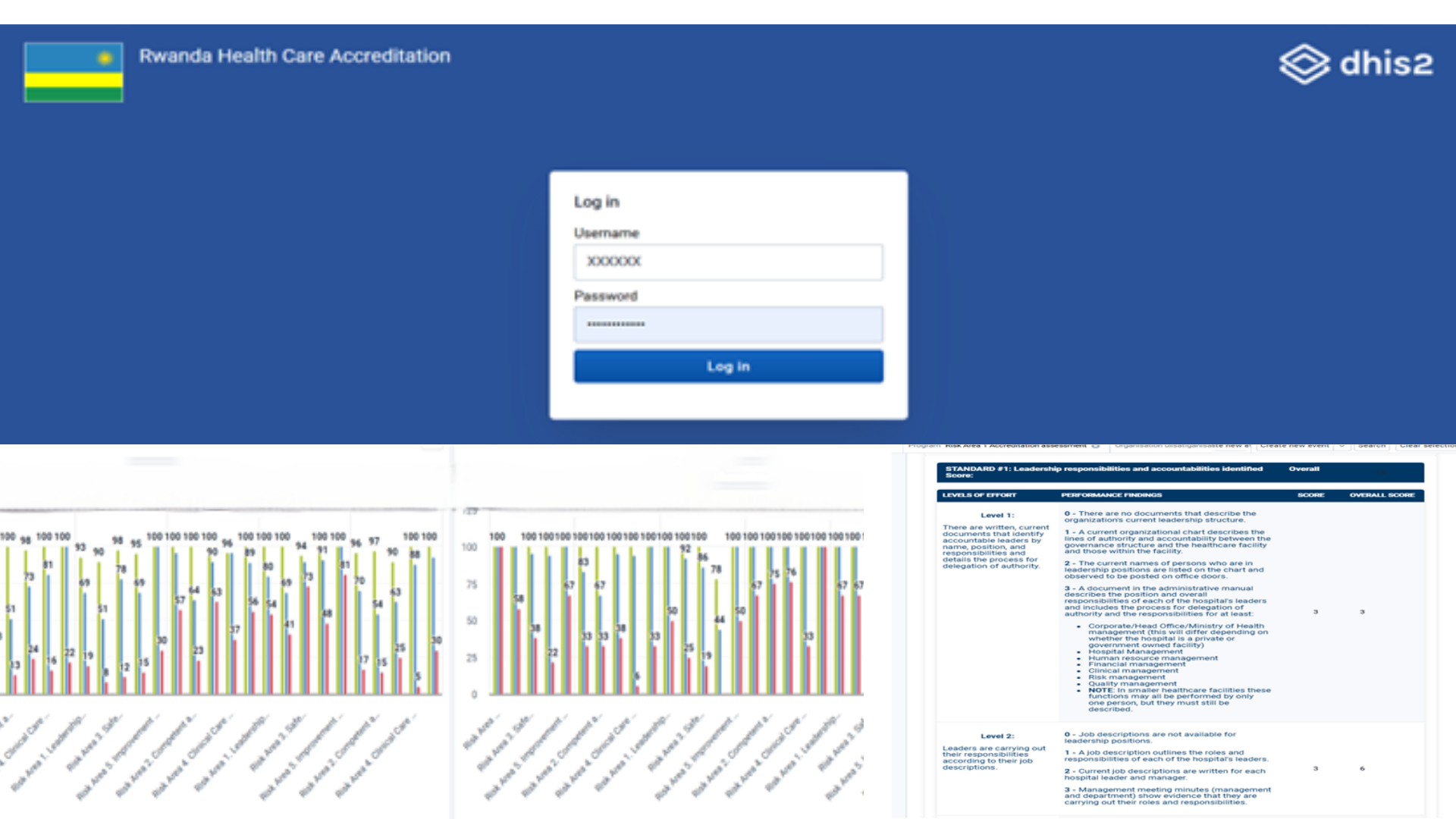
Rwanda Hospital Accreditation platform

A digital platform that assesses and tracks hospitals’ compliance with national healthcare quality standards.
Rwanda Health Council Connect (RHCC) Platform to manage the student indexing,Healcare professional Registration,License issuance ,CPD

DHIS2 Data Triangulation: The DHIS2 Data Triangulation Dashboard in Rwanda, developed by HISP Rwanda and the Rwanda Biomedical Centre, integrates multiple health data sources within DHIS2 to analyze immunization, disease surveillance, laboratory, and vital statistics data. It uses dynamic dashboards and visual analytics to identify trends, gaps, and inequities in diseases such as measles, rubella, and polio, supporting real-time, evidence-based decision-making through Rwanda’s HMIS platform.

EBS Impuruza :The Impuruza eCEBS platform, developed by HISP Rwanda and RBC, is a DHIS2-based system for real-time community event-based surveillance in Rwanda. It captures alerts from diverse sources like health facilities, schools, and media, integrating with eIDSR and EIOS for One Health responses. Paired with DHIS2 dashboards, it supports data triangulation by providing community-level event data alongside immunization, surveillance, and lab records, enabling timely public health decisions.

Performance-Based Financing (PBF) is a health financing approach that rewards health facilities and providers based on the quantity and quality of services they deliver, aiming to improve efficiency, accountability, and health outcomes. In Rwanda, PBF is a key pillar of the health system, and HISP Rwanda plays an important role by supporting the digital systems that generate reliable PBF data, particularly through DHIS2, where service delivery indicators are captured, validated, analyzed, and visualized to inform payments, performance monitoring, and decision-making by the Ministry of Health and Rwanda Biomedical Centre.

ECEBS(Electronic CommunityEvent-Based Surveillance) Digital system that enables communities to quickly report and track unusual health events for early detection and response to potential outbreaks

Cancer Registry App : A DHIS2 App to facilitate CancerRegistry DataExport to CanReg5

VMIS : A comprehensive software solution designed to facilitate the effective and efficient management of vaccine supplies and logistics within healthcare systems.

Dashbords Usage metrics app: The Dashboard Usage Metrics app has officially been approved and published on the DHIS2 App Hub. 🔗 Explore the app on the DHIS2 App Hub. This new tool fills a critical gap for DHIS2 users by providing clear, actionable insights on how dashboards are being used across the system. Instead of relying on assumptions, organizations can now understand real user behaviour and make informed improvements.

Microplanning in health refers to a detailed, bottom-up planning approach used at district, health facility, and community levels to effectively deliver services, especially for immunization and outreach activities. It involves mapping target populations, identifying hard-to-reach areas, planning resources (vaccines, staff, transport), setting schedules, and monitoring performance. In Rwanda, microplans are increasingly digitized and linked with DHIS2, and HISP Rwanda supports this process by enabling digital microplanning tools, data integration, dashboards, and capacity building to improve coverage, equity, and data-driven decision-making.

eVLMIS (electronic Vaccine Logistics Management Information System) is a digital system used to manage and monitor the vaccine supply chain, from national level down to health facilities, ensuring vaccines are available, stored correctly, and distributed on time. In Rwanda, eVLMIS is integrated with DHIS2 and other health information systems, and HISP Rwanda supports its implementation, customization, and use by strengthening data quality, interoperability, dashboards, and user capacity to enable evidence-based decision-making for immunization and cold chain management.

Scroll to Top