

ADDIS ABABA, ETHIOPIA – As Rwanda advances toward a fully digital health ecosystem, the question is no longer whether systems are digital, but how well they communicate. Last week, HISP Rwanda joined digital health leaders from Ethiopia, Zimbabwe, and Burkina Faso at the Global Fund–supported DHIS2 Integration & Architecture Workshop, focused on building resilient, interoperable national health information systems.
HISP Rwanda was represented by Manzi Joseph, Senior Integration Engineer & Data Protection Officer, and Iradukunda Derrick, Full-Stack Software Developer. The team presented Rwanda’s latest EMR–DHIS2 integration case study, showcasing a practical pathway away from fragmented, manual reporting toward automated, real-time data exchange that strengthens decision-making across the health system.
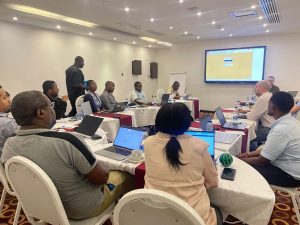

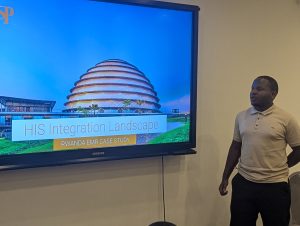
A Roadmap for Resilient Integration
The workshop served as a technical platform for participating countries to align on three critical pillars for sustainable digital health integration:
Metadata Alignment
Interoperability begins with a shared language. HISP Rwanda emphasized the harmonization of identifiers and organizational units to ensure consistent, reliable data flow from health facilities to the national level.
Robust Mediation
Effective integration depends on strong middleware. HISP Rwanda highlighted the importance of well-designed mediation layers with built-in validation and logging mechanisms to protect data quality and integrity throughout system exchanges.
Governance and Monitoring
Technology alone is not enough. Discussions reinforced the need for clear governance structures and continuous monitoring frameworks to support long-term system performance and sustainability.
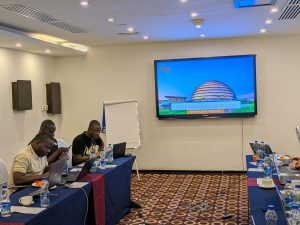
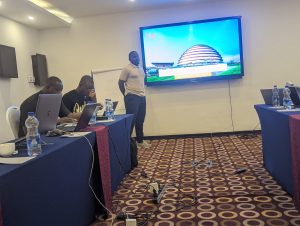
A Shared Regional Vision
“We are moving beyond fragmented data silos,” noted the HISP Rwanda delegation. “By strengthening these core pillars, we are enabling seamless data exchange and equipping decision-makers with timely, high-quality information to improve health outcomes.”
As HISP Rwanda moves forward with implementing the technical roadmap shaped in Addis Ababa, the focus remains firm: building interoperable, scalable, and sustainable digital health systems that can serve as a model for the region. END