
Rwanda has transformed the way cancer data is collected, managed, and used. Through the integration of the Rwanda Cancer Registry into DHIS2, cancer registration expanded from primarily covering Kigali to reaching health facilities across the country.
The transformation has been driven by strong leadership from the Rwanda Biomedical Centre (RBC), working with the Ministry of Health and partners, including HISP Rwanda, which provided local technical support for the development and implementation of the DHIS2-based cancer registry.
From paper-based registration to digital reporting
Before the digital transformation, cancer registration relied heavily on paper-based processes. Registrars travelled to hospitals and health facilities, reviewed patient files and pathology reports, completed paper forms, and submitted them to the central registry for review and entry into CanReg5.
This approach was time-consuming and made nationwide coverage difficult.
In 2019, Rwanda introduced the DHIS2 Oncology Tracker, enabling health facilities to capture cancer information electronically at the point of care. Patient information, tumour details, diagnosis and follow-up data can now be recorded and updated digitally, while data is transferred to CanReg5 for standardized coding, deduplication and quality assurance.
According to Marc Hagenimana, Head of the Rwanda Cancer Registry at RBC, the change significantly expanded the registry’s reach:
“After integrating our cancer registry into DHIS2, we are no longer sending those people out to different places, so we improved the coverage from Kigali city, which was covering only 1.2 million population, to nationwide scale, where we have a population of more than 13 million.”
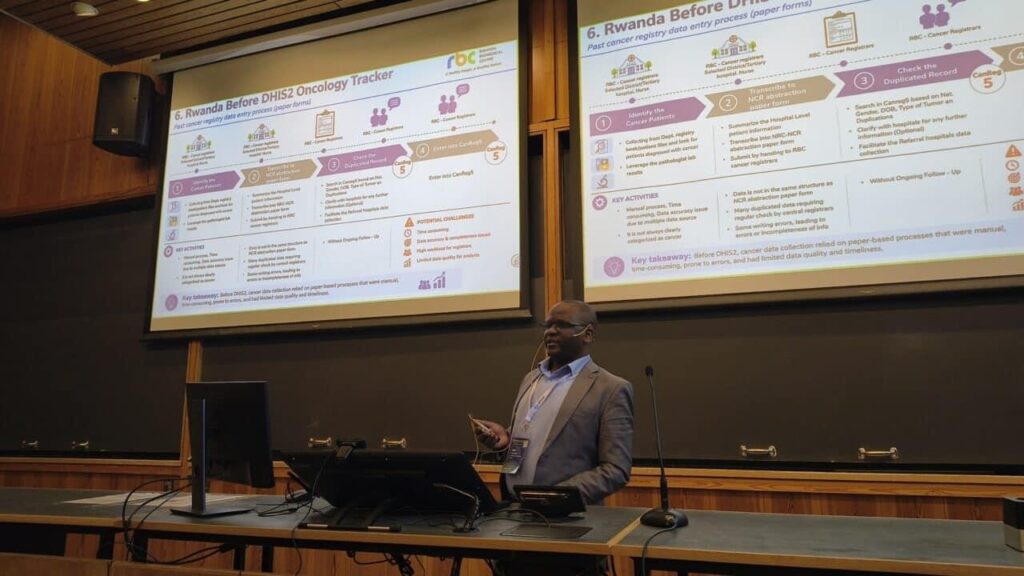
Marc Hagenimana, head of the Rwanda Cancer Registry at the Rwanda Biomedical Centre, presents information about the DHIS2-based registry at the 2026 DHIS2 Annual Conference in Oslo. (Photo by HISP UiO)
HISP Rwanda’s role in the transformation
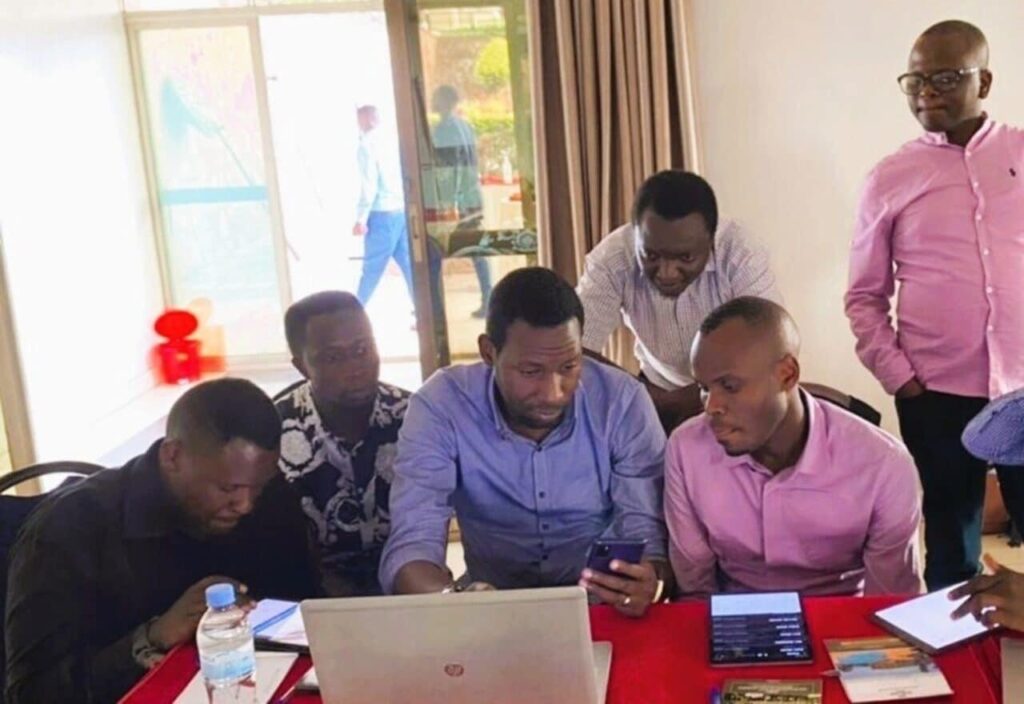
HISP Rwanda supported RBC in developing and strengthening the DHIS2 Oncology Tracker, contributing local technical expertise to adapt the system to Rwanda’s cancer registration requirements. As the implementation progressed, the team worked on data-entry forms, validation rules and other technical requirements needed to ensure that information captured through DHIS2 could meet cancer registry standards.
The collaboration brought together RBC’s cancer registry expertise, national leadership and HISP Rwanda’s DHIS2 implementation experience. The result is a system that allows cancer data to be captured closer to where care is provided while supporting national-level analysis and reporting.
Better data visibility for health facilities
The digital registry has also changed how health facilities use cancer data. Facilities can access their own information, monitor cases, identify data gaps and follow patients through their treatment journey. This provides health workers with greater visibility into patient status and supports more timely follow-up.
Hagenimana highlighted this change: “As of now, [hospital staff] can use the registry to monitor their data, to see gaps, to see the status of patients, to make a follow-up, to do everything. Now this has contributed to improvement in the quality of care provided to cancer patients.”
The proportion of registered patients with documented treatment outcomes has increased from approximately 50–55% in the earlier paper-based period to around 85–90% in more recent registry data. The registry team notes that these figures are preliminary and that a formal assessment would be needed to measure the system’s impact on patient outcomes.
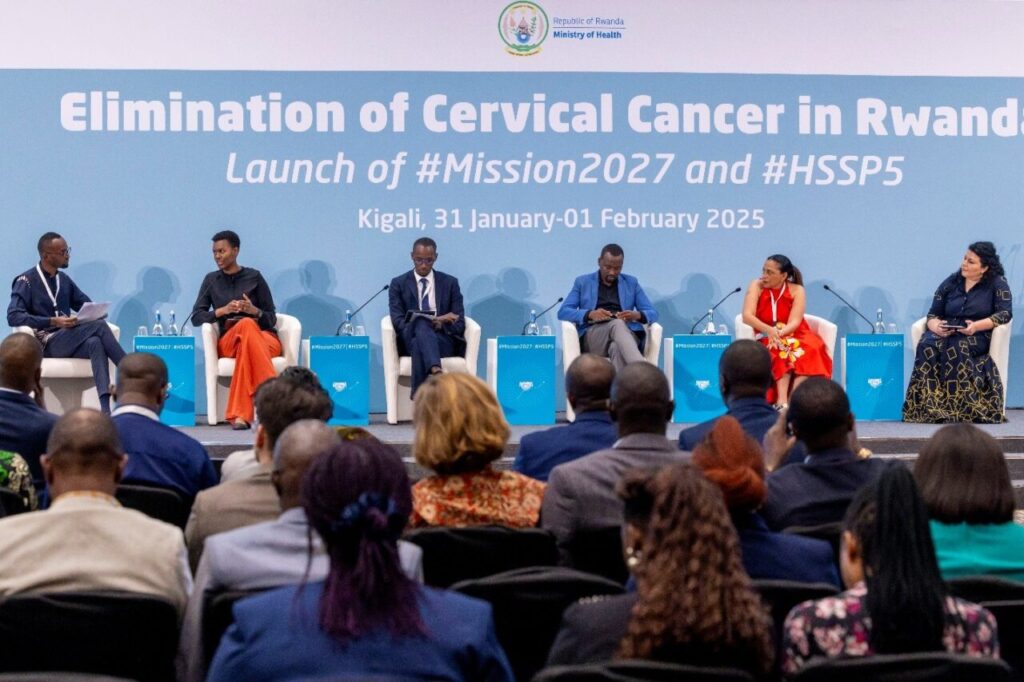
The Rwanda Ministry of Health launched its national strategy for cervical cancer elimination in 2025. The strategy will use data from the Rwanda Cancer Registry. (Photo by Rwanda Ministry of Health)
A model built for sustainability
One of the important advantages of Rwanda’s approach is that the cancer registry is built on DHIS2 infrastructure already used nationally for health information management. Rather than creating a separate system requiring its own infrastructure and long-term financing, the cancer registry benefits from existing national digital health capacity.
HISP Rwanda’s involvement also reflects the importance of having local technical expertise available beyond initial system development.
As Hagenimana noted: “HISP is always needed. Because even if the registry is fully integrated into the MoH, you can face at any time a technical challenge.” This includes technical support related to servers, system upgrades and future integrations with electronic medical records.
From Rwanda to a wider global community
Rwanda’s experience has attracted interest from other countries seeking to strengthen population-based cancer surveillance using DHIS2. The country has shared its experience with teams from countries including Zimbabwe, Tanzania and Mozambique.
The Rwanda implementation has also contributed to the development of a DHIS2 Cancer Registry Toolkit, making lessons and technical approaches from Rwanda available to other countries.
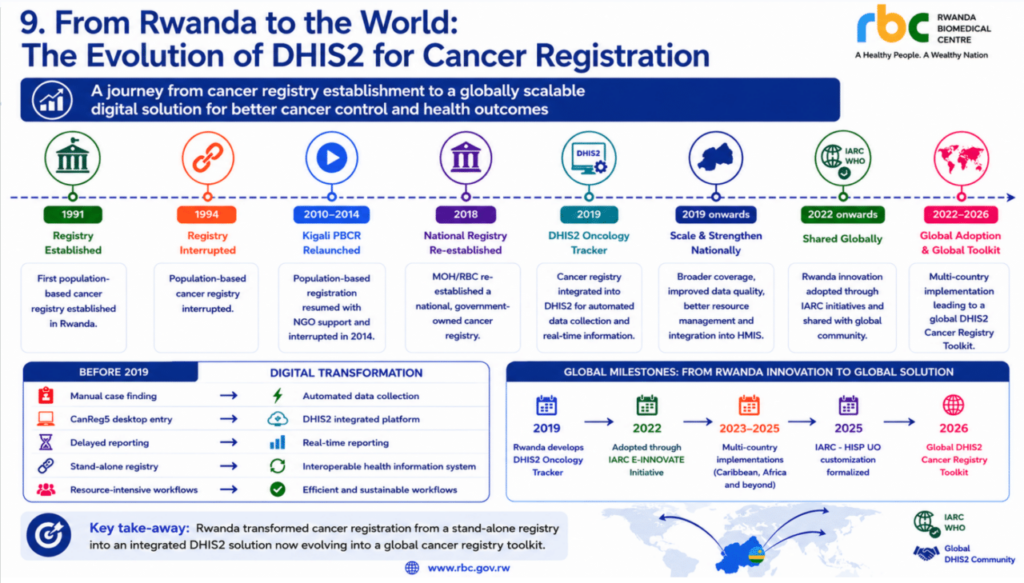
Hagenimana’s presentation at the 2026 DHIS2 Annual Conference in Oslo included details about the registry’s history and early failures. (Image by RBC)
For HISP Rwanda, the experience demonstrates how local capacity, government ownership and open-source digital platforms can work together to strengthen health information systems. The journey continues, with plans to further connect the cancer registry with electronic medical records, support research and policy development, and explore new opportunities for oncology data use.
Through its collaboration with RBC and the Ministry of Health, HISP Rwanda continues to contribute to the development of sustainable digital health systems that help turn data into actionable information for better health outcomes.
END
Also Read: https://dhis2.org/expanding-cancer-surveillance-to-13-million-across-rwanda-with-dhis2/
Watch HAGENIMANA’ s Presentation at DAC 2026 Here