
As part of ongoing efforts to strengthen digital health systems, HISP Rwanda is supporting the deployment of the HISP Electronic Medical Records (EMR) system in the Central African Republic. Implemented in partnership with the Ministry of Health and The Susan Buffet Foundation, the e-SENI initiative is carried out under the SENI project (Projet d’Appui et de Renforcement du Système de Santé).
The HISP EMR is a web-based digital platform designed to manage the complete patient care journey across hospital departments. By replacing fragmented paper-based records with an integrated electronic system, the platform enables healthcare providers to capture, store, and access patient information in real time across clinical units.
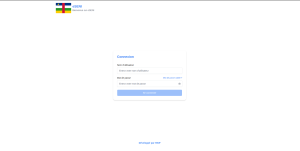
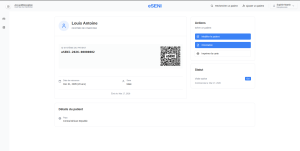
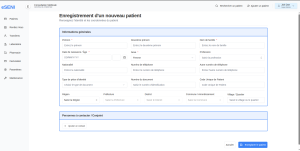
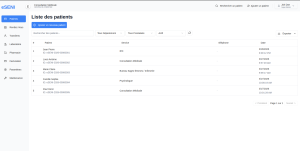
Dashboards showcasing the user interface and experience upon logging into the e-SENI (EMR) system
Moving Beyond Paper-Based Records
In many health facilities across the Central African Republic, medical records are still maintained using paper registers. This often results in fragmented information, lost or duplicated files, and delays in accessing a patient’s full medical history. These challenges can affect the quality of care and limit the ability of health authorities to collect reliable and timely health data.
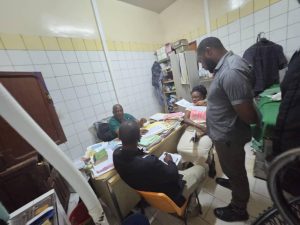
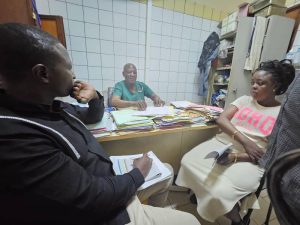
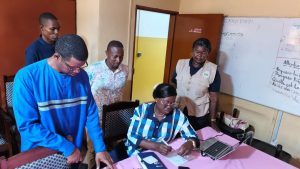
HISP Rwanda team is witnessing the reality of paper-based medical records in many health facilities across the Central African Republic.
The HISP EMR addresses these challenges by introducing a centralized digital record for each patient, accessible across hospital services. From registration and consultation to laboratory testing and pharmacy dispensing, patient information is recorded once and shared securely within the facility.
Supporting Core Hospital Services
The system supports several essential hospital functions, including patient registration and unique identification, clinical consultations and diagnosis, vital signs recording, laboratory test ordering and results management, pharmacy and drug stock monitoring, maternal and pediatric care, and billing and insurance management.
Clinical data collected during patient care is automatically structured and integrated into national health information systems, including platforms powered by DHIS2. This reduces manual reporting processes and improves the timeliness and accuracy of health data.
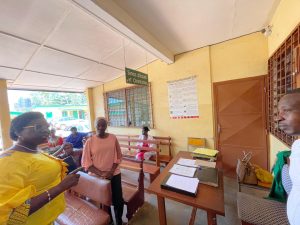
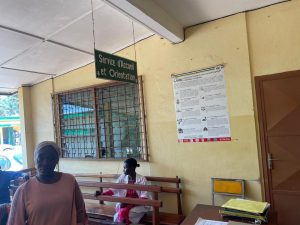
HiSP Rwanda team at hospital and Health centers supervising the implementation of EMR(e-SENI) system.
To ensure accessibility in diverse contexts, the platform supports multiple languages, including English, French, and Kinyarwanda. It is also designed to operate in low-resource environments, with offline functionality that allows facilities to continue working even when internet connectivity is limited.
Key Features
The system supports several essential hospital functions, including:
-Patient registration and unique identification
-Clinical consultations, diagnosis, procedures, and vital signs recording
-Laboratory test ordering, sample tracking, and results management with lab machines integration
-Pharmacy management, prescriptions, and drug stock monitoring
-Maternal and pediatric care services
-Billing and insurance management
-Automated reporting to national health information systems such as DHIS2
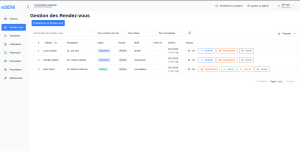
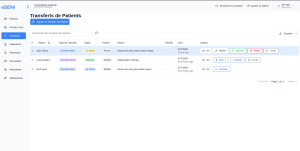
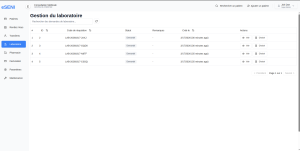
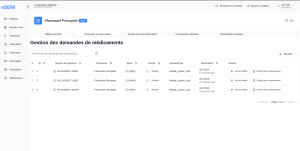
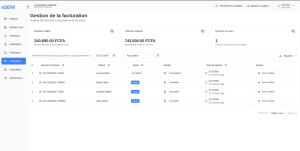
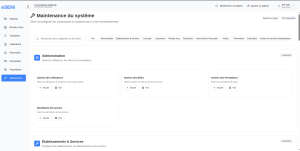
Navigating through the e-SENI (EMR) system to access patient data and key functionalities.
A Phased Implementation Approach
The deployment of the HISP EMR follows a structured implementation process that includes system assessment, customization, and capacity building. Initial site assessments help evaluate infrastructure and existing workflows in each hospital to ensure the system is adapted to local needs. During the deployment phase, the platform is configured in French and customized to reflect department-specific workflows.
Training is a central component of the project. Healthcare workers and local technical teams receive hands-on training to ensure they can effectively use and support the system. To further strengthen learning and adoption, an EMR Showroom, a live demonstration environment simulating a full hospital workflow as been established for training and knowledge sharing.

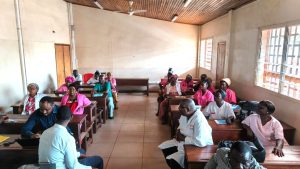
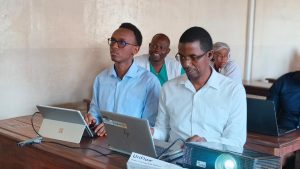
HISP Rwanda team facilitating trainings in Central African Republic
Strengthening Data-Driven Health Services
The introduction of the HISP EMR is helping transform how hospitals manage patient information and deliver healthcare services in the Central African Republic.
Clinicians can quickly access laboratory results, prescriptions, and previous consultations, allowing them to make more informed clinical decisions. At the same time, hospital administrators benefit from real-time dashboards that provide insights into patient flows, pharmacy stock levels, and operational performance.
This was made possible through the setup and integration of a central EMR server for data synchronization, enabling central-level staff to have a clear, real-time overview of activities across different health facilities.
By strengthening digital infrastructure and building local capacity, the HISP EMR is contributing to the long-term digital transformation of healthcare services in the Central African Republic, improving both patient care and health system management.
To explore the platform and its functionalities, visit the HISP EMR demonstration environment: https://emr.hisprwanda.org/fr, which showcases how the system supports the complete digital management of hospital workflows.



Group photo of HISP Rwanda team in CAR alongside key stakeholders and system users during the e-SENI (EMR) implementation
END