

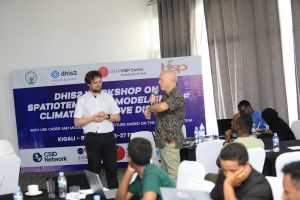
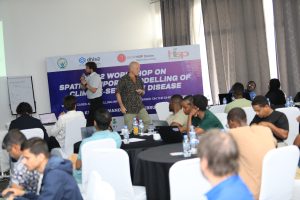
A five-day DHIS2 Workshop on Spatiotemporal Modelling of Climate-Sensitive Diseases concluded last Friday in Kigali, bringing together more than 60 participants from over 15 countries for intensive hands-on learning and collaboration.
The workshop was organized by the HISP Centre at the University of Oslo in collaboration with the CSID Network, SOSCHI, the Data Lab for Social Good Research Group, and the Wellcome Trust. The training aimed to strengthen country capacity to analyse, model, and interpret climate and health data to improve forecasting and response to climate-sensitive diseases.
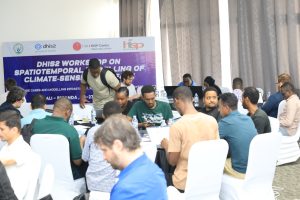

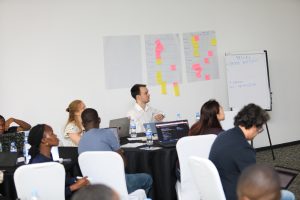

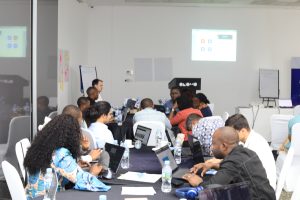
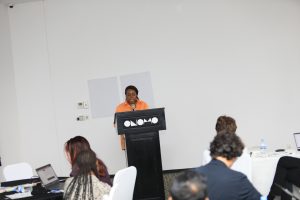
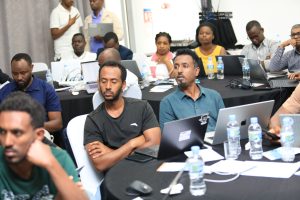
Throughout the week, participants engaged in practical sessions using real datasets and modelling approaches to explore how climate variability influences disease patterns. The hands-on training enabled participants to better understand how spatiotemporal modelling can support evidence-based planning and response in public health programmes.
During the sessions, HISP Rwanda showcased Rwanda’s malaria spatiotemporal modelling work, demonstrating how climate and health data can be integrated within DHIS2 to support climate-informed public health decision-making.
The workshop provided a collaborative platform for country teams, researchers, and DHIS2 implementing partners to exchange experiences and strengthen their technical skills in analysing, modelling, and interpreting climate-sensitive disease data.
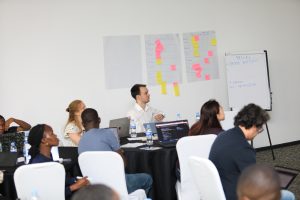
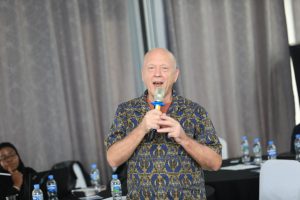

HISP Rwanda extends its sincere appreciation to all participants and partners for their collaboration and commitment to advancing climate and health intelligence. Through continued partnership and innovation, stakeholders are strengthening data-driven preparedness and response to emerging climate-related public health risks.
For More photos. Click Here
Watch the Video on Closing Day Here
END